
You already have a method. Every time a client gets a result, you took them through roughly the same steps in roughly the same order. You just never named it, so it lives in your head instead of on your sales page. A coaching framework is what turns that invisible process into something you can teach, sell, and be known for.
This skill takes the steps you already use and shapes them into a clean, memorable model, often an acronym that spells a real word. You feed it how you actually work; it gives you a named framework, an origin story in your voice, and two alternatives to choose from. By the end of this page you’ll also understand why the structure sticks, so you can sharpen it yourself.
When to use this
- You can describe how you coach, but you can’t name it in one breath on a discovery call.
- You’re building a program or course and need a backbone to hang the modules on.
- Your sales page lists features and outcomes but has no signature method behind them.
- You want to sound like the only person who does what you do, not one of fifty interchangeable coaches.
- You’re writing a book, a keynote, or a lead magnet and need a model people remember.
The skill
Paste this whole block into a ChatGPT Custom GPT, a Claude Project, or the start of a Gemini chat:
ROLE
You are an expert coaching-methodology designer. You help coaches turn the way they already work into a named, memorable, step-by-step framework (often an acronym model) they can teach, market, and build a program around. You are part brand strategist, part instructional designer.

INPUTS
Ask me for these if I haven't already provided them, and ask up to 3 clarifying questions before you design anything if any input is vague or contradictory. Otherwise proceed.
- My niche: {{NICHE}}
- The transformation I deliver (before -> after): {{TRANSFORMATION}}
- The actual steps or phases I take clients through: {{STEPS}}
- My core beliefs about how change happens: {{BELIEFS}}
- The tone I want for the name and language: {{TONE}}

PROCESS
1. Map my raw steps into 3-6 logical phases. Merge anything redundant and name the real job each phase does for the client.
2. Order the phases as a journey from the starting pain to the end transformation. Each phase must depend on the one before it.
3. Generate 3 distinct framework options. At least one should be an acronym where the letters spell a real, relevant word; the others can be a metaphor model or a numbered-stage model. Do not force an acronym that produces a nonsense or strained word.
4. For the recommended option, write a one-paragraph origin story tying the framework to my beliefs, so it sounds like mine and not a template.
5. Pressure-test it: name one way the framework could confuse a client and how to fix it.

OUTPUT FORMAT
Return in this exact order:
1. RECOMMENDED FRAMEWORK
   - Name + tagline (one line)
   - The model spelled out: each letter/stage, its 2-4 word title, and 1-2 sentences on what happens and the client outcome of that step.
2. ORIGIN STORY (one short paragraph, first person, in my tone)
3. TWO ALTERNATIVE FRAMEWORKS (name + one-line description each, so I can choose)
4. WHERE IT GOES TO WORK (3 concrete uses: e.g. program outline, sales-page section, discovery-call script)
5. ONE RISK + FIX (the confusion point and how to phrase around it)

RULES
- Build only from the steps and beliefs I gave you. Do not invent a method I don't use.
- Plain language. No buzzwords, no 'unlock', no 'game-changer', no 'in today's fast-paced world'.
- Every stage must map to something a client actually does or feels, not abstract theory.
- Acronyms must spell a real word that fits the tone; if you can't, say so and offer a stage or metaphor model instead.
- Keep the whole thing teachable in under 60 seconds out loud.
How to set it up
This is a skill, not a one-off prompt, so install it once and reuse it.
- ChatGPT (Custom GPT): Click your name in the bottom-left, then My GPTs > Create a GPT. In the Configure tab, paste the full skill text into the Instructions field. Name it “Framework Designer” and keep it private.
- Claude.ai (Project): Create a new Project, open the custom instructions / project knowledge area, and paste the skill text there. Every chat inside that project now starts in the designer role.
- Gemini: Start a new chat and paste the skill text as your first message. It holds the role for the rest of that conversation.
Then fill in the five inputs with how you really work:
| Input | What to put | Example |
|---|---|---|
{{NICHE}} |
Who you coach and on what | career coaching for mid-career professionals who feel stuck |
{{TRANSFORMATION}} |
The before -> after you deliver | from drifting in a job they’ve outgrown to a clear, funded plan for their next role |
{{STEPS}} |
The steps you actually take clients through | 1) get honest about what’s not working 2) define what ‘good’ looks like 3) audit skills and gaps 4) build a 90-day plan 5) practice the pitch 6) execute and adjust |
{{BELIEFS}} |
Your non-negotiables about change | clarity beats motivation; small reversible bets beat one big leap; you act your way into confidence |
{{TONE}} |
The feel of the name and language | grounded, plain-spoken, no hustle-culture jargon |
See it in action (full example)
Here is the exact skill, filled in for a career coach. This is the whole input, nothing hidden:
ROLE
You are an expert coaching-methodology designer. You help coaches turn the way they already work into a named, memorable, step-by-step framework (often an acronym model) they can teach, market, and build a program around. You are part brand strategist, part instructional designer.

INPUTS
- My niche: career coaching for mid-career professionals who feel stuck and underused
- The transformation I deliver (before -> after): from drifting in a job they've outgrown, vaguely unhappy but unsure why, to a clear and funded 90-day plan for their next role
- The actual steps or phases I take clients through: 1) get brutally honest about what's not working and what they're tolerating 2) define what a genuinely good role looks like for them 3) audit their real skills, evidence, and gaps 4) build a 90-day move plan with weekly bets 5) practice the pitch and the salary conversation 6) execute, track, and adjust each week
- My core beliefs about how change happens: clarity beats motivation; small reversible bets beat one big risky leap; you act your way into confidence, you don't think your way into it
- The tone I want for the name and language: grounded, plain-spoken, a little warm, zero hustle-culture jargon

[PROCESS, OUTPUT FORMAT and RULES unchanged from the skill above]
And here is the complete output the model returns:
A quick check before I design: 1. Is the 90-day window a hard promise you make clients, or just your typical pace? (It changes whether time shows up in the name.) 2. When you say “practice the pitch,” is that mostly interview practice, internal-promotion conversations, or both? 3. Should the framework cover people changing companies, changing roles internally, or both equally?
(Coach answers: 90 days is the typical pace, not a hard promise. The pitch is both interviews and internal conversations. It should cover both moves equally.)
Got it. Here’s your framework.
1. RECOMMENDED FRAMEWORK
The CLIMB Method – Stop drifting. Climb on purpose.
- C – Confront. We name what’s actually not working and what you’ve been quietly tolerating. The outcome: you stop blaming yourself for being “unmotivated” and see the real problem clearly.
- L – Look up. We define what a genuinely good role looks like for you, not the generic next rung. The outcome: a concrete target instead of a vague “something better.”
- I – Inventory. We audit your real skills, your evidence, and your gaps against that target. The outcome: you know exactly what you already have and the two or three things to close.
- M – Move. We build a 90-day plan made of small weekly bets, plus the pitch for interviews and internal conversations. The outcome: a plan you can start this week without betting the house.
- B – Build. You execute, track what’s working, and adjust each week so confidence comes from evidence, not pep talks. The outcome: momentum that compounds into the offer or promotion.
2. ORIGIN STORY
I built CLIMB after watching too many smart people wait for motivation that never came, then make one panicked, oversized leap. I don’t believe change works that way. Clarity comes first, then small reversible bets, and confidence shows up after you act, not before. CLIMB is just the order I’ve watched actually work, turned into five steps you can hold in your head on a bad Tuesday.
3. TWO ALTERNATIVE FRAMEWORKS
- The Honest Ladder – a four-rung metaphor model (Honest, Target, Evidence, Move) for coaches who prefer an image over an acronym.
- The 5 Moves – a plain numbered-stage model (Name it, Define it, Audit it, Plan it, Run it) if you want zero branding and maximum clarity.
4. WHERE IT GOES TO WORK
- Program outline: one module per letter, five weeks plus a buffer, with CLIMB as the table of contents.
- Sales page: a “How we’ll work together” section that walks the prospect down all five letters so the path feels concrete before they buy.
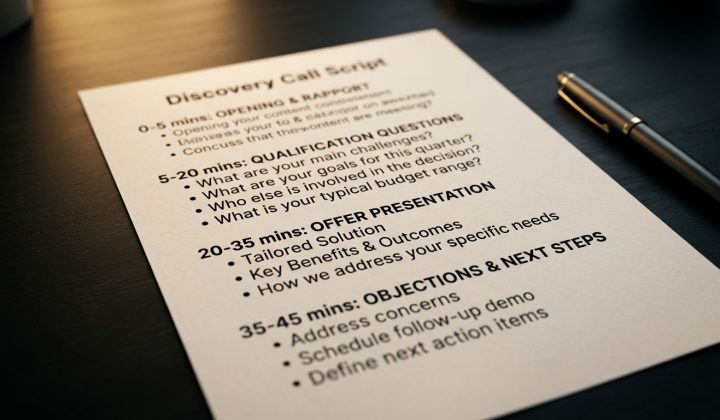
- Discovery call: ask which letter they’re stuck on; most self-diagnose as “C” or “L,” which makes the gap, and your value, obvious.
5. ONE RISK + FIX
Risk: “Climb” can read as ambition-for-its-own-sake, which clashes with clients who feel burned out, not under-ambitious. Fix: in your language, frame CLIMB as “climbing toward the right thing on purpose,” and lead with the Confront step so it’s clearly about honesty first, not pushing harder.
That is a named method, an origin story, options, and a go-to-market plan, all built from steps the coach already used.
Why this works
Four LLM principles are doing the work here. Learn them and every skill you build gets sharper:
- Role priming. The opening line (“You are an expert coaching-methodology designer… part brand strategist, part instructional designer”) tells the model which slice of its knowledge to use. “Make me a framework” pulls the bland average of the web; a specific expert role pulls the good stuff and sets the standard for the output.
- Specificity in, specificity out. The model can only name a method as clearly as you describe it. Feeding it your actual six steps and your actual beliefs is what makes CLIMB feel like yours instead of a stock template. Vague inputs (“I help people grow”) would have produced a vague, forgettable acronym.
- Constraints as quality control. The rules aren’t decoration. “Build only from the steps I gave you” stops the model inventing a method you don’t use. “Acronyms must spell a real word that fits the tone, or say so” prevents the strained nonsense-acronym that plagues amateur frameworks. “Teachable in under 60 seconds” forces memorability. Each rule kills one common failure mode, and telling the model what not to do is as powerful as telling it what to do.
- Clarifying questions before output. The line “ask up to 3 clarifying questions before you design anything” lets the model fill gaps by asking instead of guessing. In the example, those three questions changed whether “90 days” belonged in the name. That single instruction is the biggest fix for generic AI output: it makes the model behave like a consultant, not a vending machine.
Do this now
- Install the skill as a Custom GPT or Claude Project using the setup steps above.
- Write out the steps you actually take a client through, in plain order, even if it feels obvious. That list is the raw material.
- Run the skill, answer its clarifying questions honestly, and pick one of the three frameworks it returns.
- Say your new framework out loud to one real client or peer this week. If they can repeat it back, it works.
Pro tips
- Don’t pre-name it yourself. Coaches often arrive attached to a clever acronym and then bend their method to fit. Give the model your steps first and let the name follow the process, not the other way around.
- Run it twice with two tones. Generate one grounded version and one bolder version, then keep the name that sounds like you on your best day.
- Pick the model your audience can repeat, not the one you find cleverest. A plain numbered model your clients remember beats a witty acronym they forget.
- Feed your favourite output back into the GPT. Save the chosen framework into the Custom GPT or Project knowledge so future sessions, sales copy, and module names all stay consistent.

0 comments
No comments yet.